Enemy Sun

The Toll it Takes

Most of us are aware that the sun’s powerful rays can damage unprotected skin. We know its intense heat often transforms metal objects into firebrands. Less discussed, is its effect on fabrics.

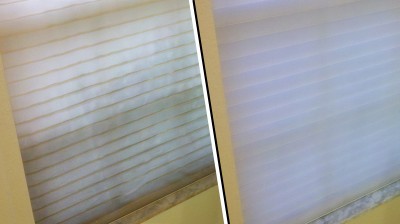
Shown in the featured photo is a Silhouette® shading by Hunter Douglas, whose rear fabric layer has been ravaged by years of exposure. The shade was one of three, covering a guest bedroom window (inset).

Interestingly, the three were in varying stages of deterioration, with the one pictured suffering the worst of it. A small area of its bottom vane showed a mottled, slightly out of alignment appearance when viewed from the front. Otherwise, all three looked just fine at first glance. In fact, the owner had initially summoned us to clean them. She had no idea what bad shape they were in.

The Bearing Location Has

highrise condo
High-rise condos have associated elevation values

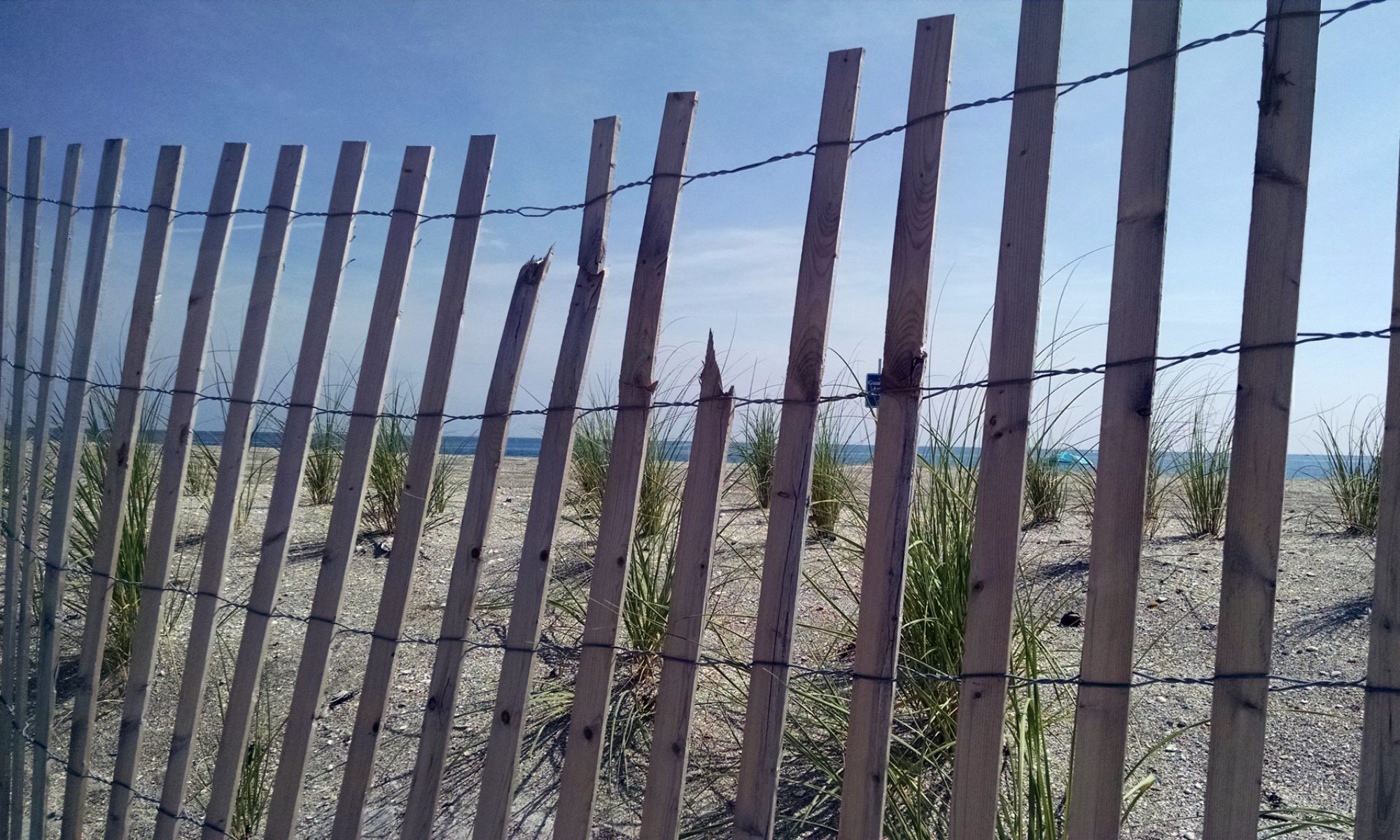
At this point a little background on the residence may be in order. An eighteenth floor penthouse condominium, situated on the Southeast corner of the building, it’s Eastern exposure receives as little as two hours of morning sunshine, daily, thanks to a large patio overhang. The Southern exposure gets almost no direct sun during the summer months. However, with no overhang, in winter the sun is on it all day looooooong. Welcome to the side of the building occupied by our opening with the wrecked shades.

Now, the openings facing East were also fitted with Hunter Douglas Silhouette® shadings. But they did not show anything approaching the same extreme damage. Likely, owing to two factors. They were newer by two years, and they never saw the sun at its most intense, for prolonged periods.

dilapidated barn
This barn appeared sound the day before it collapsed

SIDE NOTE: Given that this level of damage to window treatments is seen much more frequently in high-rise settings than at ground level, one is left to wonder what part elevation, however marginal, may play in intensifying the sun’s damaging rays.

As it is primarily a winter home, the residence is occupied only about 150 days a year. It’s understandable, then, that the progression of damage escaped the homeowner’s notice. Especially when you consider the fact that a dilapidated barn, for example, may appear to be structurally sound for years before deterioration accelerates as it nears the day when, inevitably, it falls down.

Plotting a Solution

Also understandable, the homeowner’s dismay at what a short life her now useless window shades had enjoyed. As well as her reluctance to replace them with the same type of product. But, what to go with, instead?

Manufacturers make no representation as to which of their fabric products fare better under extreme conditions. And perhaps wisely so, for there are many factors that can hasten sun damage. These include, but are not limited to, heat, humidity, dust, convection, and even the type of glass damaging rays pass through before actual contact with the fabric. The unofficial position is that, since there are so many possible combinations, and that they differ from opening to opening, such factors simply cannot be quantified.

That said, consensus seems to have it that non-woven fabrics, such as those used in honeycomb shades, have a greater life expectancy than woven fabrics, like those found in Silhouette®. However, they all utilize glue lines to hold their respective cells, louvers and vanes together and these are also known to break down with long term exposure to sunlight. In the final analysis, it seems the consumer must decide on his or her own which product to purchase. In this particular case, honeycomb shades were selected.

Nothing is Exempt
blown out drapery hem
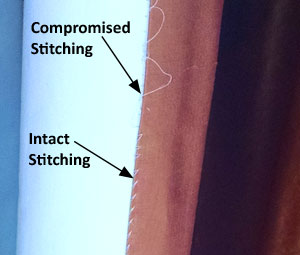
Drapery side hem with area of compromised stitching

As discussed in our response to a visitor’s comment at the bottom of the Avoiding Damage to Vertical Blinds page, plastic components like carriers, carrier assemblies, and tensioners, dry out and become brittle with prolonged exposure to sun and heat.

The same condition befalls stitching in the pleats and side hems of drapery panels. Even when the recommended monofilament is used. Yes, that’s right. A “medium test” fishing line is the preferred thread for stitching drapes. All too often light duty monofilament, or even all purpose threads are used, and these degrade much quicker. Once the first stitch goes, the rest soon work their way lose until a hem or pleat is completely blown out.

The truth is, any material will eventually succumb to sun and heat. Still, due diligence pays off. To the extent possible, research the quality of any window fashion you wish to purchase. Have windows tinted. Layer treatments, so as to protect the most expensive of them with heavy duty underlying barriers like roller shades or plantation shutters. Also, if you’re the owner of a ground-level home, consider making use of shrubbery, awnings and anything else with the potential to shield windows from the sun.

ADVANCED ON-SITE‘s specialty is drapery and shade cleaning, though we offer a range of other services related to window coverings. Contact us to discuss your needs.

Job Photo – 10/06/15

Requested Service: Cleaning

This, friends, is perhaps the most unique window covering we’ve ever seen. And we’re in the business!

Its hardware, carriers and control cords are virtually identical to those of any other vertical blind system (left photo). But that’s where the similarity ends.

Where other systems are intended to suspend the familiar PVC vanes from their carriers, or less rigid fabric vanes with weights sewn into their bases, these suspend something quite different – braided nylon strands.

Hanging freely, they form groups that can either “puddle” on the sill’s surface, or cascade over its edge (right photo). While this is an interesting effect, it comes at the expense of privacy. As the photo clearly shows, this is not the type of covering one would commission for a bedroom window.

A certain homeowner at St. Andrews Country Club, Boca Raton inherited these when he bought the existing residence. Most likely European made, they had been installed in several openings overlooking a very large back patio.

Somehow, rust-like deposits had formed along the bottom, while the home sat empty for several months in foreclosure. The gentleman was given our contact info by a Boca window coverings firm and, following an afternoon cleaning session, we left him with a song in his heart.

ADVANCED ON-SITE‘s specialty is drapery and shade cleaning, though we offer a range of other services related to window coverings. Contact us to discuss your needs.


Removing Stains from Household Fabrics

Oh No! That Stain’s Gotta Go!

Your grandson marks up the upholstery of a beloved chair with crayons. The family dog returns from a scrap with your neighbor’s cat and spatters blood all over a white, sheer drape as he shakes himself in front of it. You’re confounded by the appearance of mildew on a fabric window shade, with no apparent source of moisture nearby.

These are all actual scenarios described to ADVANCED ON-SITE by individuals seeking removal of notoriously difficult substances. Truthfully, while all WERE removed, and the overall success rate exceeds 95%, elimination of all traces of a substance can never be guaranteed. Primarily because there’s no way to know for certain that previous attempts to remove it have not already been made.

First, Stop and Think About the Risk

Consider the fact that a stain can be permanently “set” if the wrong method is used to remove it.

Any substance with the potential to gain a foothold in textile is going to have a protein, oil, or tannin base. Some substances actually contain elements of more than one base. In such cases the correct spotting agents must be applied in a very specific sequence, often repeating each more than once, before moving to the next. These sensitive operations are best left to a professional.

Even then, certain factors reduce how aggressively a stain can be attacked. Including fabric type and weave. More on that in a minute.

Mechanical Action

Rarely does a stain just dissolve away with the simple application of a spotting agent. Anyone who does their own laundry knows, more often than not mechanical action is necessary.

While the agitation that occurs in a washing machine is a form of mechanical action, it is less effective than other, more direct means. For example, washboards used from colonial times right up, and into, the 20th Century. Then there’s the ancient method of beating clothes on rocks. On the other hand, a simple fingernail can sometimes coax particulates from the fibers of a garment, or other household fabric.

Scrubbing a stained area against a non-stained area of the material is also effective. Commonly available stain removing formulas are usually applied, allowed to “dwell,” then reapplied for this purpose. The key is knowing how much mechanical action can be brought to bear before the material sustains damage. Too much, and “abrading” will occur.

Inherent Dangers

Abrading is something we’ve all seen. Think of a rope rubbing against a rock or a tree. The first sign of damage will be a fraying appearance at the point of contact, indicating that small fibers have been severed and lifted from the main body.

Natural fibers are quicker to abrade than synthetics. But, all will eventually show signs of wear. Even before abrading occurs, the trajectory of individual threads can be disrupted in coarse or loosely woven fabrics, thereby making them appear twisted and uneven.

The Safe Solution

By now you’ve likely concluded that stain removal can be a tricky business. And you’d be right. In addition to everything else, when a stain is treated without, first, cleaning the entire chair, drape or shade, it ends up looking like just that – a stain treatment. In other words, it appears obvious that you’ve cleaned the stain and the area around it, while the rest of the item retains dust and other pollutants that have accumulated over time.

When a stain must be removed from an expensive window treatment, what you need is a company that guarantees against damage. ADVANCED ON-SITE is that company.


Job Photo – 09/22/15

Requested Service: Cleaning


Customer at Woodfied CC, Boca Raton was so impressed with our ability to remove dog urine from these lined drapes, we were called back for a second service. This time, smudged feces was also present. It didn’t seem appropriate to ask how it happened, but the mental images were quite entertaining.

ADVANCED ON-SITE‘s specialty is drapery and shade cleaning, though we offer a range of other services related to window coverings. Contact us to discuss your needs.

Job Photo – 09/06/15

Requested Service: Cleaning


This well appointed home at Woodfield Country Club, Boca Raton could be used as a Hunter Douglas Gallery Showroom, for all the company’s products on display there.

We’ve been called out to clean every one of the home’s Silhoutte® shadings three times, just since 2007! The reason? Insects crawl inside Silhouette’s louver cells, sometimes getting their little legs caught in the face fabric’s sheer weave. Of course they die there and can be very difficult to remove, completely. 

Fear not! We make such problems go away, daily.

ADVANCED ON-SITE‘s specialty is drapery and shade cleaning, though we offer a range of other services related to window coverings. Contact us to discuss your needs.

Job Photo – 08/27/15

Requested Service: Cleaning

It’s been mentioned elsewhere on the site that we also install shades, blinds and plantation shutters. Pictured, is an install of Luminette® shadings done 6 years ago by our company.

Following that installation, the decorator had a local drapery workroom custom make and install the drapes and valances you see. This week the homeowner requested that we return to clean everything.

It was refreshing to forego “level readings,” for a change. Having installed the Luminettes, which are susceptible to permanent damage if not level during cleaning, we were confident they need not be checked, never mind re-installed.

ADVANCED ON-SITE‘s specialty is drapery and shade cleaning, though we offer a range of other services related to window coverings. Contact us to discuss your needs.

Job Photo – 08/22/15

cleaned silhouette

Requested Service: Cleaning

Fabric window coverings suffer most in the kitchen. Food spatter, greasy cooking film, barbecue fingerprints and the inevitable traffic to the grill just outside, fouled these shades but good.

No problem. Clean as the day they were born, after our injection/extraction treatment.

ADVANCED ON-SITE‘s specialty is drapery and shade cleaning, though we offer a range of other services related to window coverings. Contact us to discuss your needs.

Black Soot: Bane of Household Fabrics

candle flame

A History of Black Soot

Before modern marvels like the light bulb and central heating, homes were plagued for centuries by black soot from open flames. Candles, oil lamps, fireplaces – they all spew microscopic carbon particles, easily carried along on even the most feeble air currents.

The problem reached critical mass during the industrial revolution when outdoor air quality, too, was threatened by soot-belching factories and locomotives. Just as dirt found its way into homes during the Dust Bowl, Londoners learned that “the black” knew no barriers.

The soot hangs on the curtains, the books and the little cracks of the ceiling; and the ladies wonder how it is that they cannot keep their finger ends clean.”   – Dirty Old London: The Victorian Fight Against Filth

As they had for millennia, wool and linen remained the most widely used textiles of the time. With its loose weave and high absorbency, linen, especially, trapped the tiny black particles like a filter feeding sea fern traps plankton. Hopelessly locked in its fibers, as much as twenty percent of the stuff defied attempts at removal.

Times Changed, Black Soot Remained

Air quality standards and environmental regulations have drastically reduced the amount of black soot in our lives. But it hasn’t disappeared from the home, completely.

The warm, rosy glow of candles is an irresistible diversion to some, who often do not realize that even modern fabric blends with stain resistant properties can be tainted by their emissions.

As stated in an article by BEC Engineering, a leader in indoor air quality services, certain widely available candles can produce as much as 100 times more black soot that others. These include aromatic varieties poured into glass or ceramic containers, candles containing unsaturated hydrocarbons (most soft wax varieties), and any candle placed in an air draft caused by a fan, air conditioning vent, open window or other source.

In addition to avoiding the foregoing, the article goes on to suggest that users consider burning candles with thin, braided wicks trimmed to ¼” before each use. Further, they should be snuffed after an hour and allowed to cool before re-use.

Other sources claim that candles made with bee’s wax, or vegetable oils produce significantly less black soot than those with petroleum bases. It is, however, important to remember that all candles produce some black soot, a natural byproduct of the incomplete combustion that occurs in a yellow flame.

Black soot, DURING and AFTER removal
Black soot, DURING and AFTER removal

What We Can Do for You

Thankfully, ADVANCED ON-SITE‘s exclusive cleaning process is capable of removing black soot from draperies and shades, where they’re often deposited most heavily through a process called convection. Still, one should be aware that there can be no guarantee of complete removal from certain materials such as those found in Graber Crystal Pleat® honeycomb shades and the vertical vanes of Luminette® shadings by Hunter Douglas.

Verified by MonsterInsights